Newcastle councillors have moved to keep the city’s new food and garden waste collections in council hands, rejecting tenders and directing further negotiations over how the service will operate.
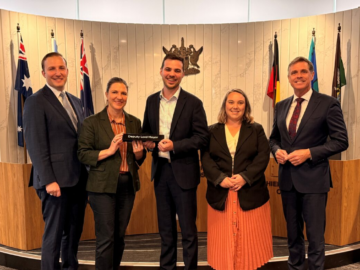
Following a confidential session on Tuesday, 6 October, Lord Mayor Gavin Morris announced the resolution, which described waste collection as a “core local government service” and highlighted the value of retaining council’s ability to provide it.
The decision concerns the collection component of the new Food Organics and Garden Organics (FOGO) service, which will allow residents to put food scraps in their green bins alongside garden waste.
Ahead of the vote, a council said that private FOGO collection could save each ratepayer almost $500 over the life of the contract. Council also said the four affected drivers would retain council employment in new roles at least at their existing hourly rate.
Labor councillors supported introducing FOGO but argued that council employees should deliver it.
“We want a food and organic waste collection service for our residents and ratepayers, but we want this service to be delivered by CN employees – not a private provider,” they said in a statement supplied by Councillor Elizabeth Adamczyk.
“We believe public money should be used to provide public services and importantly, to pay those workers properly.”
Private contractors already collect and process FOGO for Maitland, Cessnock and Singleton. Lake Macquarie also uses contractors for its green bin collections and organics processing.
Newcastle’s resolution leaves open negotiations on council’s in-house bid and with a private tenderer for trucks and other support. One option is “dry hire”, where trucks are supplied without drivers, allowing council employees to operate them. Maintenance, education and other support could also form part of the negotiations.
The ACCC granted authorisation on 7 October for Newcastle and Port Stephens to jointly procure collection and education services. Newcastle’s final collection arrangement is still to be settled.
The debate over who collects the bins follows a change in council’s approach to processing their contents.
Newcastle had previously pursued a processing facility at its Summerhill Waste Management Centre, designed to turn food and garden waste into compost onsite. The proposal, with a listed capital investment value of $33 million, was approved by the Hunter and Central Coast Regional Planning Panel on 17 September 2024.
Council has since opted for external processing. In March this year, councillors unanimously accepted a tender for processing FOGO at a third-party facility through a joint procurement with Port Stephens. Tuesday’s collection decision does not reverse that separate arrangement.
What this means for residents
Council continues to plan for a mid-2027 rollout, ahead of the NSW Government’s household FOGO deadline of 1 July 2030.
When the service launches, residents will be able to put food scraps, including meat, bones and dairy, into their existing green lid bins alongside garden waste. Green bin collections will increase from fortnightly to weekly, while red general waste bins will remain weekly and yellow recycling bins fortnightly.
The initial rollout will cover households with a three-bin kerbside service in houses, duplexes, townhouses and unit buildings containing up to 30 dwellings. Council will work with strata managers and body corporates to assess opportunities for larger apartment complexes to receive the service later.
To make the transition easier, eligible households will receive a kitchen caddy for collecting food scraps, a starter supply of compostable liners and instructions.
Council says replacement liners will be available, but its published information does not yet explain how they will be supplied or whether they will be free. The impact of the overall FOGO service on household waste charges is also yet to be determined.
Neighbouring councils offer a guide to how ongoing supplies could work. Cessnock and Maitland, which both introduced FOGO in June 2025, provide annual supplies of approved liners and free top-ups. Cessnock delivers its annual allocation to households, while Maitland makes replacement rolls available for residents to collect.
The environmental aim is to keep food waste out of landfill, where it breaks down and produces methane, a potent greenhouse gas. By separating these organics and turning them into compost, Newcastle and Port Stephens expect to divert an additional combined 10,000 tonnes of food waste from landfill each year.
Early results elsewhere in the Hunter show the potential benefits. Singleton Council reported in May that waste sent to landfill through its red bin collections had fallen by more than 28 per cent following the introduction of FOGO.
Until Newcastle’s service begins, residents should continue putting only garden waste in their green bins.